Turning homes into experiences: Apartmentary makes global push for ‘K-interior’
A decade after launching Korea’s leading remodeling brand, TV producer-turned-CEO eyes Hong Kong expansion
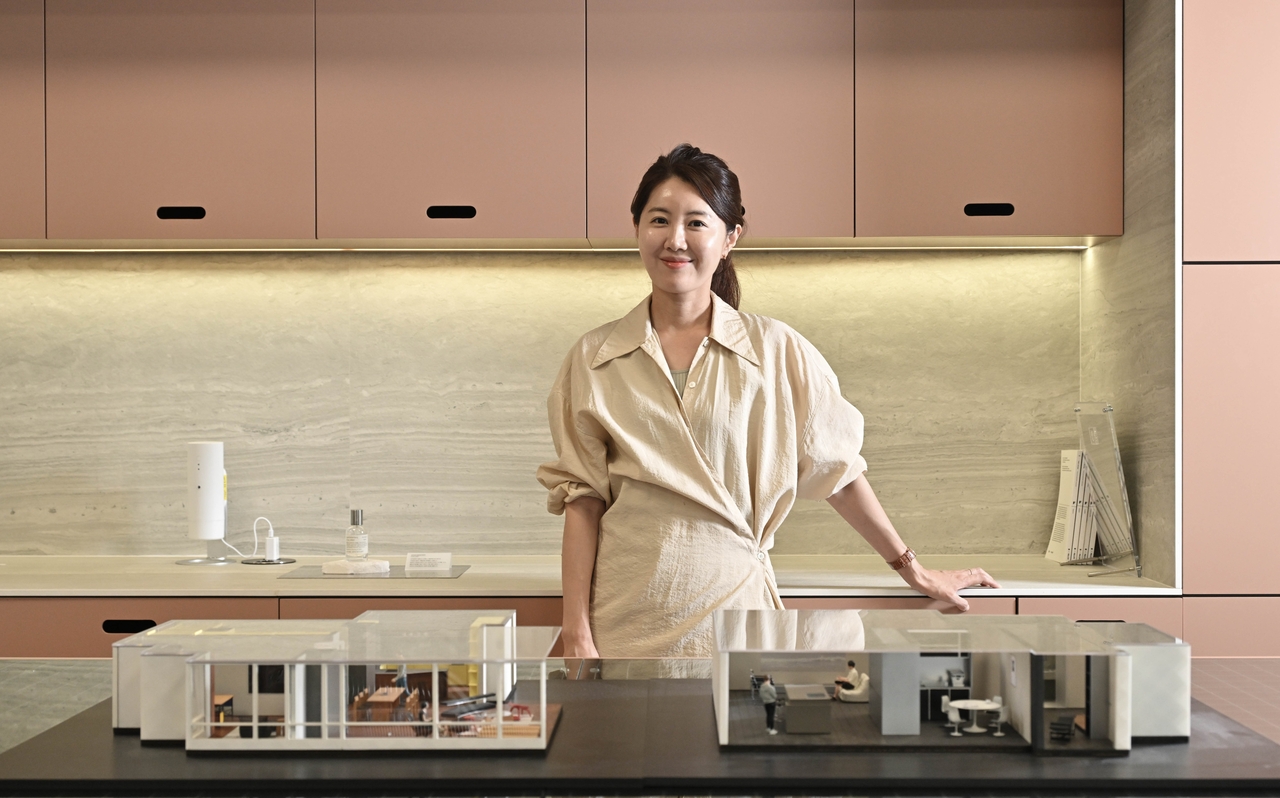
Fixing an industry was never the plan for Apartmentary founder Yoon So-yeon — she just wanted to fix her newlywed home. But in doing so, she has quietly rewritten the rules of Korea’s home remodeling market.
In 2013, after purchasing an outdated apartment in Seoul’s Mapo-gu district, Yoon set out to remodel it. Her search for a trustworthy, reasonably priced interior renovation firm quickly turned into disillusionment.
“I didn’t like how all the apartments in Korea looked the same. I wanted something that reflected my style,” she recalled in an interview with The Korea Herald. “But after meeting several companies, I was shocked by how unstructured the industry was. None of them met my expectations, so I decided to do it myself.”
At the time, Yoon was a decade into her career as a TV producer at MBC. What gave her the confidence to pivot was the familiar rhythm of broadcast production.
“Every week, I had to coordinate cast, crew, and editors — everyone — on tight schedules to deliver shows on deadline,” she said. “That cycle of chaos, structure and delivery was my life for 10 years. Interior work felt surprisingly similar. Both are about creating order out of chaos.”
From experience to enterprise
Yoon quickly realized the renovation process left customers anxious — confused by vague pricing and poor communication. At the root of the problem was the lack of a standard workflow.
“Ten years ago, the remodeling industry kept customers completely in the dark,” she said. “Information asymmetry was severe, and services were so complex that most people couldn’t fully understand what they were paying for. That left plenty of room for misinformation, and even exploitation.”
To make matters worse, many contractors — the industry’s key players — lacked the incentive to change. “Back then, interior services weren’t mainstream. There just weren’t that many people willing to pay for them,” she said. “So the market stayed exactly as it was.”
Yoon began documenting her home makeover step-by-step on her blog. Readers responded enthusiastically — some even asked her to renovate their homes. A publisher turned her posts into a bestselling book, which soon caught the attention of SoftBank Ventures Asia.
“SoftBank reached out and asked me to pitch,” she said. “I hadn’t considered starting a company until then. But after 10 years in the same field, I was ready for something new. I gave it a shot and received my first seed investment of 300 million won ($217,000).”
Curating experience through trust
Since its founding in 2014, Apartmentary has built its identity on one principle: customer trust.
Remodeling projects can span months. What defines the experience for customers, Yoon believes, isn’t just the result, but how smoothly that time unfolds.
“I wanted to turn home remodeling from a construction job into a customer experience service,” said Yoon, outlining the philosophy that has guided the company from day one. “Flawless execution matters, but what stays with customers is the process — how clearly we communicate, how transparently we operate.”
To deliver that, Apartmentary built an end-to-end platform integrating every step — from contracts to post-completion care — into one seamless system. Real-time communication and feedback loops form the backbone of its trust-based model.
“When we started, the market was fragmented — tens of thousands of firms with no unified system,” Yoon said. “Now, I can confidently say we lead the industry as a full-stack provider offering a cohesive journey.”
Yoon’s design philosophy is equally grounded. Good design, she says, isn’t about luxury. It’s about function, longevity, and subtle elegance.
“Anyone can make a 300 million won kitchen,” she said. “The real challenge is creating a 10 million won kitchen that works beautifully.”
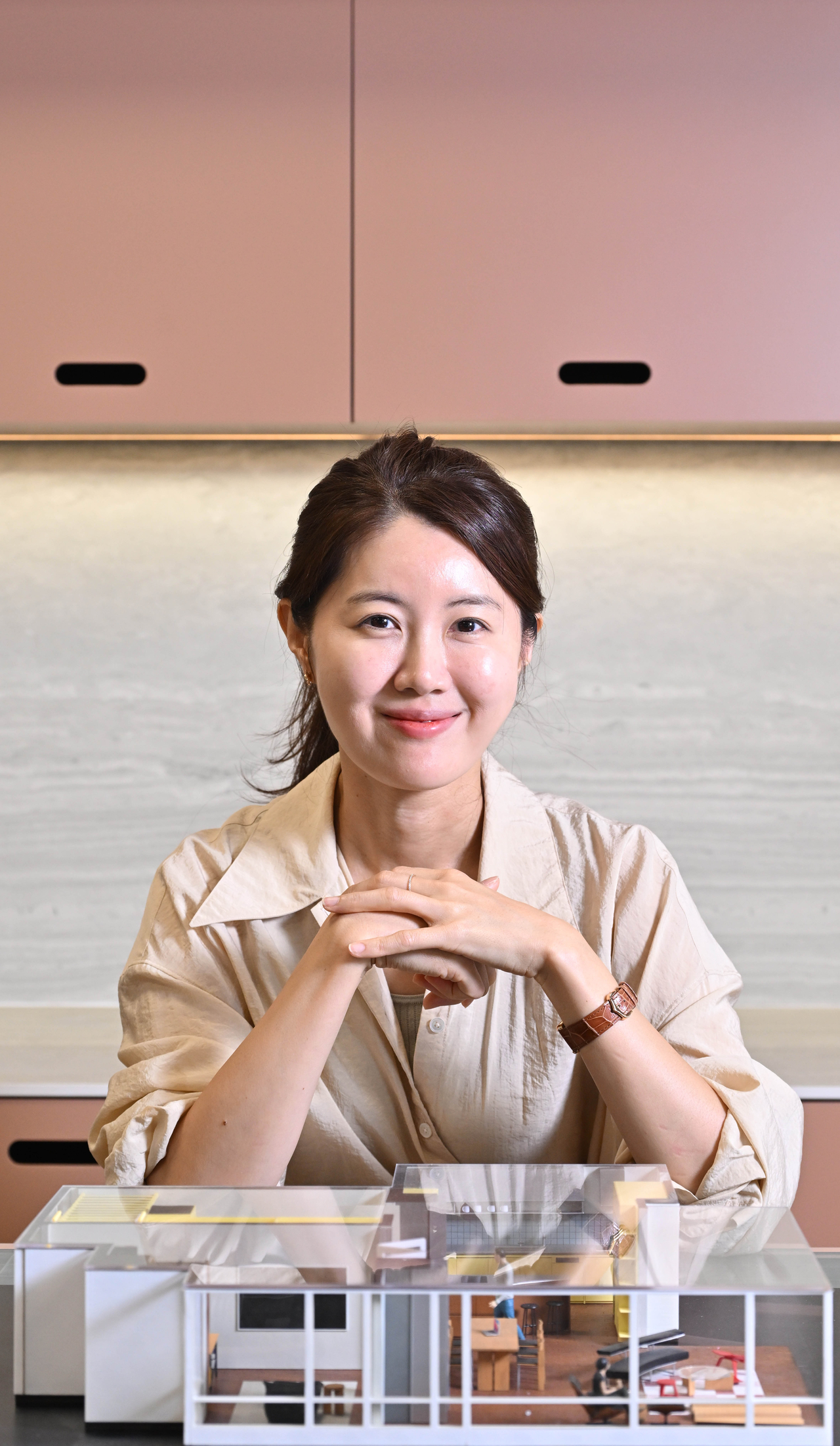
Apartmentary doesn’t chase the lowest prices or aim to be high-end. Yoon defines the company’s core customers as individuals or families in their 30s to 50s with stable, well-paying careers — often in finance or licensed professions — who are looking for interiors that are both distinctive and sustainable.
“We don’t build anything I wouldn’t buy myself,” Yoon said. “Our edge isn’t price. It’s trust. What clients value is a renovation they can remember for the right reasons, and that’s what becomes the brand.”
Apartmentary’s global journey began organically, with overseas inquiries arriving even before any formal expansion.
One came from Aaron Chin, a seasoned interior executive who had successfully launched Danish brand BoConcept in Hong Kong. Convinced that Apartmentary’s design would resonate, Chin offered to open its first overseas office.
“Housing in Hong Kong is similar in many ways to Seoul: compact, urban and lived in by young families with refined tastes,” Yoon said. “But despite high demand, branded services for younger residents were rare. Prices were steep, but the quality often lagged. We saw a clear opportunity.”
Within six months, Apartmentary secured over 20 high-value projects, each significantly larger than typical Korean contracts. A local office and showroom are slated to open in the third quarter.
“Our goal is 100 projects,” said Yoon. “The team believes we’ll get there soon, but I’m not rushing. What matters isn’t how fast we grow, but how well we deliver.”
Following waves of K-pop and K-beauty, Yoon sees “K-interior” as Korea’s next cultural export. Inquiries have already come from New York, Singapore, Ho Chi Minh City, and even Ulaanbaatar.
“Through conversations with potential clients and local research, I’ve seen a strong appetite for Korean aesthetics,” she said. “Just as early adopters in Korea once sought out ‘Made in Italy’ interiors, emerging markets are now turning their attention to ‘Made in Korea.’”
Beyond remodeling: Building a brand universe
As she navigates Apartmentary’s evolution into a comprehensive interior brand, Yoon sees far greater potential abroad than in Korea’s still-rigid remodeling market.
“Interior renovation remains a legacy industry in Korea, and our company is undervalued,” she said. “There’s much more room to expand the value chain, and we’re already seeing greater potential overseas.”
While Apartmentary doesn’t require heavy capital to operate, Yoon is actively seeking investment to support the company’s global ambitions. “We’re looking for the right partner to help us break out of local constraints and unlock Apartmentary’s full potential internationally.”
She’s already laid the groundwork. Since 2019, Yoon has launched a series of sub-brands in furniture, materials and spatial design — each born from real project experience and customer demand. Most are seeing steady growth, she noted.
Last year, she also introduced Officementary, a subsidiary focused on the “non-bidding” segment of small-to-mid-sized commercial interiors, where trust and quality matter more than price.
“Our strength is lean, customer-driven launches,” Yoon said. “We don’t throw big budgets at new brands. We start small, focus sharply and build from real needs.”
That lean DNA has fueled consistent, meaningful growth. Apartmentary has completed over 2,000 remodeling projects to date and continues to set new sales records. In just the first half of this year, it signed 300 contracts — already more than half of last year’s total. The company is now on track to hit 100 billion won in revenue this year.
Still, Yoon emphasizes that numbers are not the ultimate goal.
“I didn’t start this to run a remodeling company. From day one, I set out to build a brand. We can scale it like a fashion business. Design and materials matter, but what we’re really selling is experience and trust.”
The Top 100 Global Innovators series spotlights the trailblazers shaping Korea’s future across a range of industries — from bold entrepreneurs and tech pioneers to research leaders — whose innovations are making a global impact beyond Korea. More than a celebration of success, the series offers a deeper exploration of the ideas, breakthroughs and strategies driving their achievements. — Ed.
link